
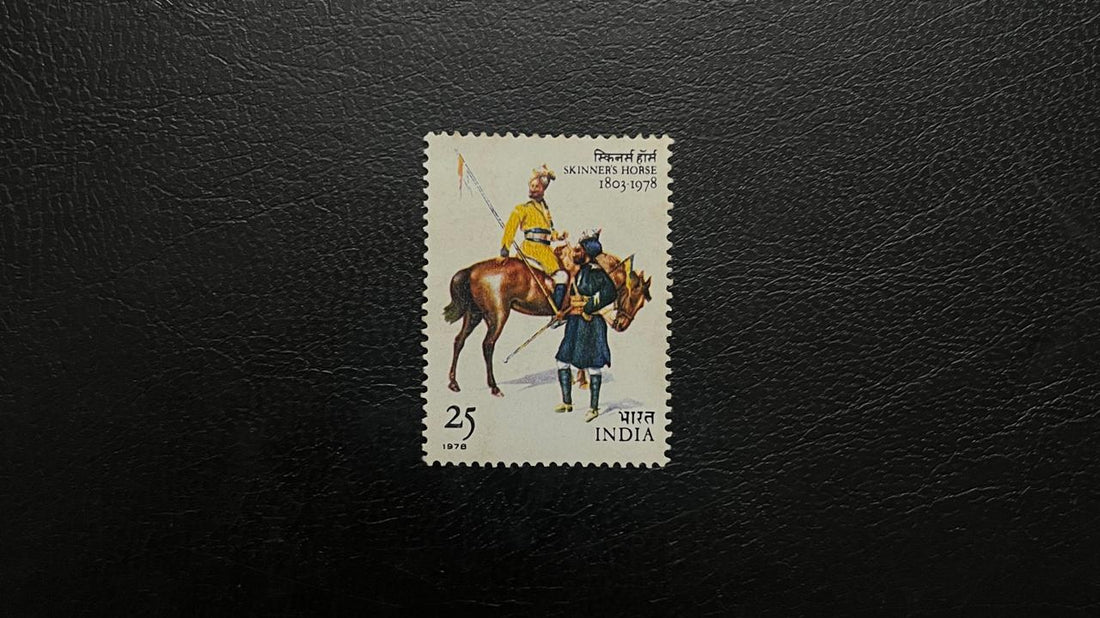
Skinner’s Horse is one of the famous names connected with cavalry history in India. A stamp or postal item on this subject gives collectors a way to study military heritage, regiment identity, uniforms, horses, and the visual language of service and tradition.
Why this topic matters to collectors
Military heritage stamps are popular because they combine history, symbolism, and strong visual themes. Cavalry subjects are especially attractive because horses, uniforms, lances, badges, and regimental colours create memorable designs.
For a collector, Skinner’s Horse can fit several themes: Indian military history, cavalry, regiments, horses, colonial and post-colonial military heritage, uniforms, and commemorative issues. The subject can be collected seriously without making unsupported claims about rarity.
Philatelic and historical background
Cavalry units played an important role in earlier military systems, and their identities often continued as part of regimental tradition. Philately helps preserve these stories in a compact and accessible form through stamps, special covers, and cancellations.
Study the design for regimental symbols, horse imagery, uniform details, inscription, issue date, and cancellation. If the item is a special cover rather than a regular stamp, check the event, location, and whether the cancellation is clear.
What to look for in a collection
A good album page can pair Skinner’s Horse material with stamps on the Indian Army, cavalry, horses, war memorials, military academies, and Republic Day themes. Keep the description factual and focused on documented history.
- Check whether the material is a stamp, FDC, or special cover.
- Look for clear military symbols and readable cancellation details.
- Pair with horse, army, regiment, and Republic Day issues.
- Keep covers intact; do not remove stamps from event covers.
- Record event location, date, and official issue details.
Common buying mistakes
The common mistake is buying damaged military covers just because the subject sounds prestigious. Always check condition, cancellation clarity, official status, and whether the cover has been folded, stained, or mishandled.
How Bharat Exotics collectors can use this post
Use this post to build a military heritage section in your Bharat Exotics collection. It is useful for collectors who enjoy uniforms, regiments, cavalry, defence history, and India-related commemoratives.
Collectors who want to explore related material can browse India stamps, first day covers, postal history, and the full Bharat Exotics collections.
SEO and album presentation notes
For a stronger album page, write one short caption explaining the subject, one caption explaining the postal issue, and one caption explaining why the item belongs in your collection. Add the issue date, denomination, condition grade, and source when known. If you own both the loose stamp and the first day cover, describe the difference between them so a new collector understands why both formats can be worth keeping. Mention related catalogue details when available, and note whether the item is mint, used, cancelled, or preserved on cover. This simple structure improves the article for readers and also helps search engines understand the connection between the person, event, stamp, cover, and collecting theme.
Storage and documentation notes
Keep stamps, covers, miniature sheets, information cards, and postal stationery in archival stock books, sleeves, or mounts. Record the source, date of purchase, condition notes, cancellation details, and any catalogue or postal-reference information. This habit protects value and makes the collection easier to explain when you show, trade, or sell it.
Frequently asked questions
Is Skinner’s Horse a military or horse collecting theme?
It can be both. It fits cavalry, military history, horses, uniforms, and India themes.
Are special covers collectible?
Yes, especially when official, well-preserved, and clearly cancelled.
What should I avoid?
Avoid overpaying for damaged, unclear, or poorly documented material.
Final note
Skinner’s Horse is a strong thematic subject because it combines military memory, horse imagery, and collectible postal design.